June 26th 2026|By: Eliana De Loera
Magical realism is a unique narrative style that seamlessly weaves magical or fantastical elements into our everyday life, making the extraordinary feel natural and integral rather than separate or purely imaginative. This blending creates a rich storytelling experience where magic serves as a lens to explore deeper emotional and cultural truths. The film Encanto is a prime example of this, where magic is not just decorative or whimsical but deeply tied to the themes of family, memory, place, and inherited responsibility.
In Encanto, the magical gifts each family member possesses symbolize much more than just supernatural abilities. (which is my favorite part realistically connects too real life, as a person everyone has there own talent personality who they are.)They represent the emotional pressures and generational expectations that shape each character’s identity and role within the family. The magic reflects cultural values and the weight of family legacy, showing how personal talents and responsibilities are often intertwined with collective history. The family’s magical house is a powerful symbol as well (without thef family being whole at peace, united it falls apart) it holds memories, sustains the family’s magic, and physically embodies the connection between place and identity. This connection blurs the boundaries between fantasy and reality because the magic is inseparable from the characters’ lived experiences and emotional struggles.
The film’s magic functions symbolically and metaphorically throughout the story. For example, Mirabel’s lack of a magical gift highlights themes of exclusion, self discovery, and the search for meaning beyond inherited roles. Her journey reveals how family expectations can be both a source of strength and a burden. The magic also exposes unresolved family histories, such as past trauma and sacrifice, that continue to shape the present(Rebuilding the house and all of them being united again and getting over the past). This use of magical realism deepens the emotional resonance of the film, making the magic feel like a natural extension of the characters inner lives rather than an external fantasy.
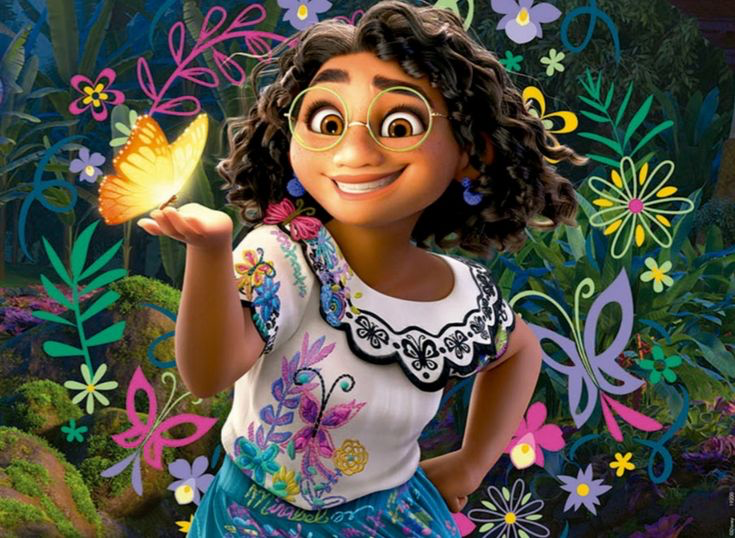
The themes from Encanto that resonate with the poems “Bilingual Sestina” by Julia Alvarez, “Monstrance Man” by Ricardo Pau-Llosa, and “Border Boy” by Alberto Rios include identity, cultural heritage, family, and the experience of navigating between different worlds or expectations. In Encanto, the characters magical gifts and struggles highlight how family and culture shape personal identity and belonging. Similarly, “Bilingual Sestina” explores living between two languages and cultures, reflecting the blending of tradition and growth seen in the film. “Monstrance Man” touches on spirituality and cultural symbols, much like Encanto uses magical realism to represent family history and legacy. “Border Boy” captures the feeling of living between two cultures, paralleling the characters navigation of their individual gifts alongside family and cultural expectations. Together, these works emphasize how identity is deeply connected to family, memory, and cultural blending.
Concluding Encanto uses magical realism to explore the intricate dynamics of family life, showing how magic can symbolize emotional pressure, generational expectations, and cultural values. The film’s blending of fantasy and reality invites viewers to see the extraordinary in everyday relationships and to understand that the magic within families is tied to love, struggle, and the legacy passed down through generations. Deepening the story’s emotional depth and connects it to broader themes found in literature that examines family, memory, and inherited responsibility.
Thank you for reading Blog 3!!
 latinxlitdotblog
Leave a comment